
The Montessori Way
The child gives us a beautiful lesson—that in order to form and maintain our intelligence, we must use our hands.
“Whoever touches the life of a child, touches the most sensitive part of a whole which has roots in the most distant past and climbs toward the infinite future.” – Maria Montessori
Montessori education is a philosophy and method of learning developed by Dr. Maria Montessori, an Italian physician and educator who dedicated her life to studying how children learn best. Through careful observation, she discovered that children learn most effectively when they are given freedom within limits, hands-on experiences, and an environment carefully prepared to meet their developmental needs.
At its foundation, Montessori education is based on the belief that children are naturally eager to learn and that they progress through distinct stages of development, which Dr. Montessori called the planes of development. Each plane corresponds to a period of growth characterized by particular sensitivities, interests, and learning capacities.
In the Montessori classroom, often referred to as a prepared environment, every material, piece of furniture, and activity has a purpose. The materials are hands-on and self-correcting, allowing children to explore abstract concepts through concrete experiences. This sensory-based learning builds deep understanding and long-term retention.
A hallmark of Montessori education is the mixed-age classroom, which promotes collaboration and community. Younger children learn by observing and working alongside older peers, while older children gain confidence and leadership by helping and mentoring younger classmates. This dynamic mirrors real-life learning and nurtures empathy, patience, and respect.
Montessori educators serve as guides rather than traditional instructors. They observe carefully, introduce materials at the right moment, and support each child’s individual path of discovery. This approach cultivates independence, concentration, and intrinsic motivation—the foundation for lifelong learning.
Areas of the Montessori Classroom
The Montessori classroom is a carefully prepared environment designed to support each child’s natural curiosity, independence, and love of learning. Every area has a specific purpose and set of materials that build foundational skills while nurturing confidence and joy in discovery.
Practical Life
In the Practical Life area, children learn skills that help them care for themselves and their environment. Activities such as pouring, sweeping, buttoning, or watering plants may seem simple, but they build focus, coordination, independence, and a sense of responsibility. Grace and courtesy lessons—like greeting others, waiting their turn, or offering help—foster respect and social awareness.
Sensorial
The Sensorial materials help children refine their five senses and organize the information they take in from the world around them. By exploring qualities like size, colour, texture, sound, and shape, children learn to compare, categorize, and notice details. This hands-on work strengthens their powers of observation and lays the groundwork for later study in math, language, and science.
Language
Language development is woven throughout the Montessori environment. Children build vocabulary through conversation, stories, and object-based lessons. They progress naturally from spoken language to writing and reading using tactile materials like sandpaper letters and movable alphabets. The goal is to nurture clear communication and a genuine love of words.
Mathematics
Montessori math materials move from the concrete to the abstract, allowing children to see and physically handle numbers and quantities. Using beautifully designed tools such as number rods, bead chains, and the golden bead material, children discover mathematical relationships, patterns, and operations in a tangible way. This approach builds deep understanding and confidence with numbers.
Cultural Studies
The Cultural area introduces children to the wider world through geography, history, science, and the arts. Lessons and materials encourage exploration of land and water forms, animal and plant life, cultural traditions, and creative expression. Children begin to see their place in a global community and develop a sense of wonder and respect for the diversity of life.
Beyond academics, Montessori education emphasizes the development of the whole child—intellectual, social, emotional, and physical. At its core, Montessori education aims to nurture children who are self-directed, responsible, and deeply engaged in the world around them—qualities that prepare them for future academic success, but more importantly, it’s what Montessori deemed “An Education for Life”.
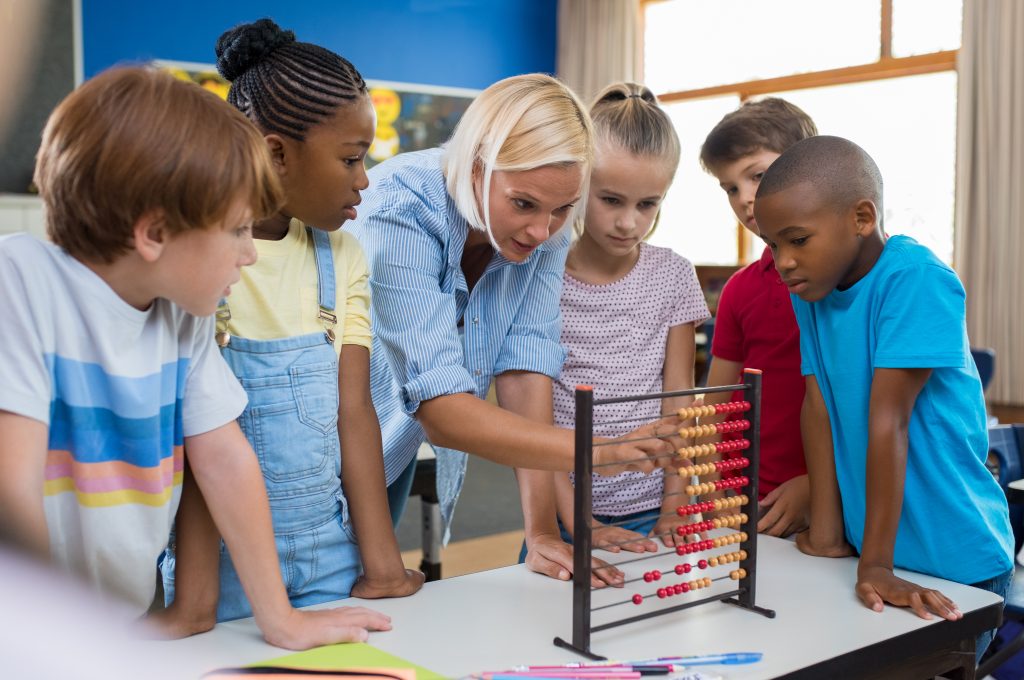
The Montessori method views children as naturally motivated learners. It aims to cultivate independence, concentration, and a lifelong love of learning by providing specially designed materials and a nurturing setting where educators act as guides.